Second Life: Los Angeles Plays Itself (The Essays)
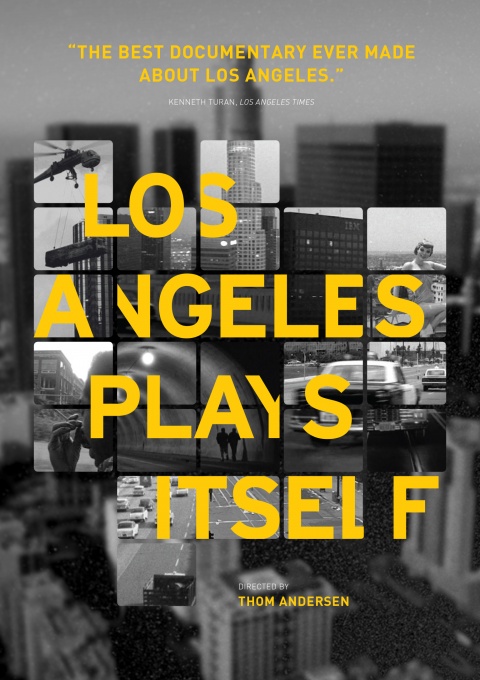
Thom Andersen’s Los Angeles Plays Itself is a research heavy essay in film form that takes a droll look at the way the city has been portrayed in movies. Using hundreds of clips from blockbusters and little-known B-movies, Andersen skewers the many ways Hollywood has misrepresented its hometown, by literally using its streets as a stand-in for other cities and, more insidiously, by reshaping and over-simplifying its history while promoting sinister conspiracies of deep-seated corruption—sunshine and noir. A central sequence in the film draws out the repeated trope of using examples of Los Angeles’ homegrown modernist architecture as infallible signs of evil—houses designed by Frank Lloyd Wright, Richard Neutra, and John Lautner all starring as lairs of gangsters and drug dealers and running counter to the architects’ oft-stated intent to use new technologies to create healthier, more affordable living environments. Indeed Andersen, who lives in an RM Schindler house and takes the travesty personally, began thinking about this film while being irritated by the way the 1997 neo-noir L.A. Confidential used Neutra’s Lovell Health House as the villain’s headquarters.
The film is long, almost 3 hours, but has a built-in intermission. The first part sets up the thesis, that American filmmakers use these slippery representations of the city to promote a mostly cynical, right-leaning vision of urban life, a modern hellscape. The second part builds on this, arguing that the cynicism of films like Polanski’s Chinatown, which works to confirm a sense of social and political powerlessness among audiences—“Forget it, Jake, it’s Chinatown”—is countered by a group of social realist documentaries from the ’60s and ’70s that show the lives of Black and Native working-class people.
This is a film about place, and most of the clips focus on location rather than actors. Indeed, the consistent presence in the film, the star, is the voice-over narrated by Encke King, a fellow documentary filmmaker. King’s voice, which sounds by turns depressed, annoyed, and amused, picks up when discussing the work of Kent MacKenzie, Charles Burnett, and Billy Woodberry, bringing the film to an almost rousing conclusion.
The film was first shown at the 2003 Vancouver International Film Festival, where it won an award for Best Documentary. Because of myriad questions concerning permissions it was not released commercially, and for 10 years existed as a high-quality video master, only shown in specialist film screenings with Andersen present. It was remastered and re-released as a DVD by Cinema Guild in 2014, which is the version we are screening at Human Resources in 2026. The DVD package contains the booklet of essays we are making available online here, and via QR code at Human Resources, as part of our Second Life collection.