The Sick Shall Inherit the Earth
by Emma Dexter

View of the Palisades Fire, Los Angeles, January 8, 2025. Image via California Department of Forestry and Fire Protection (CAL FIRE).
When the fires came in January, I woke to a sky the color of over-steeped tea, my bed a freckled gray where the air had settled softly into my sheets. The warped wooden window frames of my home, a bright pink shingle-style Victorian built in 1897, had often left me exposed to the elements, an inconvenient quirk I usually found charming, but one that was now compromising my health. I taped black garbage bags over the glass, sealing myself inside, and endured a brutal cough. I tried to make my home a fortress. Later, I donned an ill-fitting respirator mask and drove with 250 ready-to-eat meals in my trunk to the parking lot of a diner in Azusa, where a newly materialized task force led by a man with a Flower of Life neck tattoo redirected me to the Pasadena Community Center. I turned back west on the deserted 210, catching faint glimpses of the fire in the distance. As I drove, the stench of burning plastic flowed through the car vents.
SAFE

Todd Haynes, Safe, 1995 (still). Color film in 35mm, 119 min.
30 years before the Palisades and Eaton fires, Todd Haynes introduced us to Carol, a wealthy and environmentally-afflicted Los Angeles housewife played by Julianne Moore, in his 1995 film Safe.1When we first see Carol, she is in the passenger seat of her Mercedes, pulling into the garage of her faux-Tudor home that sits somewhere in the San Fernando Valley. She appears in the garden as a tender rabbit, or some small rodent caught nibbling in the front yard. She sniffles. After contracting a sinus infection that she never recovers from, Carol grows increasingly allergic to the world. Her symptoms snowball into coughing fits, bloody noses, and convulsions, the origins of her illness impossible to identify. She sees an allergist, and eventually a psychiatrist. She perches anxiously on the waiting room stool, camouflaged by her polyester uniform in a sea of pink, anticipating answers from one of her many (male) doctors, who will only come up empty-handed.
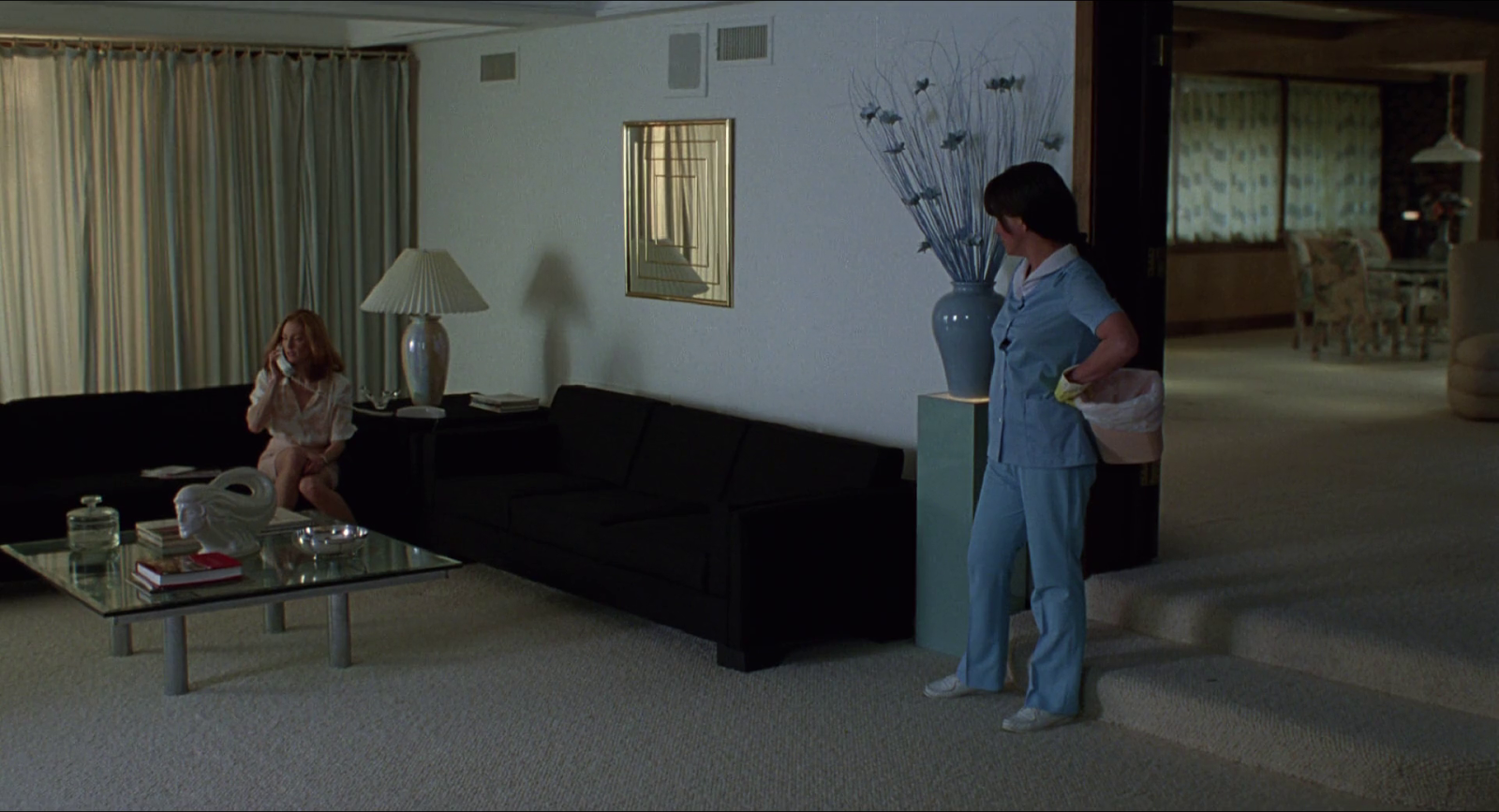
Carol eliminates all allergens, receding further and further into isolation from possible triggers. She stops wearing makeup, stops attending her aerobics class. Social interactions are reduced to weak platitudes—“I’m just a little rundown;” “I’ve been a little under the weather.” Her subjectivity is expressed through the only two activities that give her room to breathe: dressing herself, and dressing her home.
Todd Haynes, Safe, 1995 (still). Color film in 35mm, 119 min.
Carol is swallowed by the grandiosity of her house, a domestic temple built for ten yet occupied by three (Carol, her husband, and stepson). Despite the ivy-covered, East Coast collegiate exterior, the interiors host a particularly West Coast post-modernism. The sterile living rooms and bedrooms capture our attention more often than Carol does. Her clothing is pastel and synthetic, paired with sensible heels and nude pantyhose. For a Valley stepmom in the late ‘80s, turned out in a Shirley Temple perm and pearls that seem snuck from her mother’s jewelry box, her style is completely infantilizing. She orders a muted teal couch only to receive it in black, a color so violating to her precious pastel sensibility that it triggers in her some of the only anger we see in the whole film. At the return counter, she insists she wouldn’t have made the mistake herself, murmuring that black “doesn’t go with anything”—it’s just not sensible, in other words. You’d have to be mad.
Land of Light and Air
It is difficult, within the film, to make clear separations between where doctors’ office waiting rooms end and domestic space starts. Chasing a diagnosis, Carol floats aimlessly across the Sanitarium Belt, residing in the buckle. Throughout the late 19th and early 20th centuries, Southern California was home to a swath of tuberculosis recovery sanitariums. Ample sunshine and dry mountain air made it a desirable destination for the ill, searching for places to live heliocentrically. Heliotherapy, the treatment of various ailments through prescribed periods of sunbathing, had been a known remedy for pulmonary tuberculosis2since the time of Hippocrates, but not until the mid-1800s did philanthropic institutions begin funding the establishment of recuperative heliocentric retreats.3The first, Görbersdorf Sanatorium in Poland (built in 1854), set a somewhat unchanging precedent for sanitarium4design: deep verandas, covered balconies, and garden shelters for reclining in the open air.5Early modernism reacted to a resurgence in tuberculosis and cholera. Industrialization had rapidly expanded the working class. Sanitation was largely absent in social housing. Modernism interrogated the possibilities of mass production and how it could aid the integration of hygiene into urbanized living. Modernist design bled back and forth from social housing design to hospital design, informing one another, keeping defining features: balconies, verandas, white-painted concrete, and factory-produced components. These components made up a new modernist design subsect, the International Style, which would multiply and multiply in sunny Los Angeles under the stewardship of a few young minds, one of whom arrived from Vienna with a reverence for Frank Lloyd Wright and a conviction that buildings could heal.

Le Corbusier’s Villa Savoye, a classic example of the International Style, built in 1929. Poissy, France. Photo: Renato Saboya.
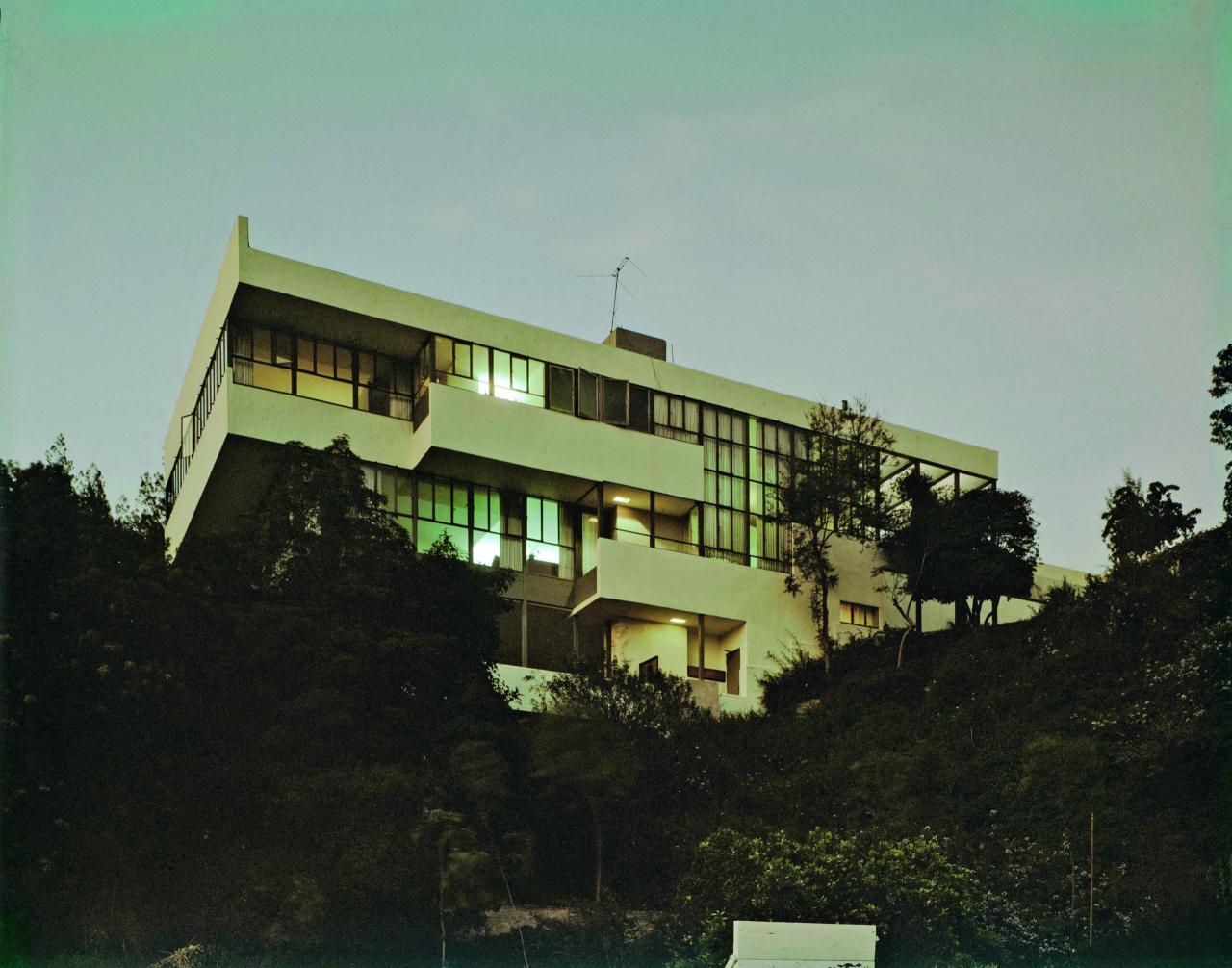
Richard Joseph Neutra came west, somewhat unannounced, in the 1920s, expecting to commune with fellow Austrian-American architect Rudolph Schindler.6Between 1927 and 1929, Neutra designed what would become known as the Lovell Health House for Dr. Philip Lovell, a naturopathic doctor, health columnist for the L.A. Times, and a former client of Schindler.7Lovell was a strict vegetarian, a “drugless” health practitioner, and an apostle of sunbathing.8I’m not sure I would categorize him as a snake oil salesman type—he appeared fatherly and reliable, buttoned up in a doctor’s coat like any average family physician of the time.9Obsessed with avocados and nudism, he sought to build a home in the hills of Los Feliz that integrated his health-focused ideals and advocacy for natural living, incorporating the same mass-produced design language of European modernism that originated in the treatment of tuberculosis. The Lovell Health House, surrounded by avocado trees to fuel its inhabitants’ raw food diet, boasted clean, bright, white framing lines believed to clear the brain of mental neuroses. Each room was flooded with ample sunlight and prioritized splendid views of the mountains. The design was quintessentially medicinal and free from heavy ornamentation, since its essential goals were an abundance of light and air.
Richard Neutra, Lovell Health House, Hollywood Hills, Los Angeles, CA, 1929. © J. Paul Getty Trust. Getty Research Institute, Los Angeles (2004.R.10).
With the Lovell House, Neutra attracted attention for his ability to seamlessly integrate health and design. Among those who noticed Neutra’s talents were Benedict and Nancy Freedman, two Hollywood screenwriters who married in 1941, despite Nancy’s lifelong illness. A child actress who was diagnosed with persistent rheumatic fever after the contraction of strep throat at age three,10Nancy toured the country in Six Characters in Search of an Author, an absurdist metaphysical play that unintentionally reflected the ambiguity of her chronic illness, and the feeling that she wasn’t really living.11Benedict said about their marriage, “[H]er father told me that it was insane of me to want to marry a girl who had at most three months to live, and I said that Nancy and I had talked it over and had decided that even if it was only three months, we would want to enjoy it.”12And so they contracted Neutra to build them a writers’ retreat, one with fresh air and sunlight, the kind of simple remedies that would either aid Nancy’s recovery, or make her last few months alive more comfortable. The Freedman House, completed in 1949, followed the basic formula for California modernism at the time: seamless indoor-outdoor transitions, spaces for sunbathing, a pool, plenty of natural light, and a stunning view of their Pacific Palisades neighborhood. Nancy died peacefully at 90 in 2010, having lived a full life as a feminist novelist, perhaps proving Neutra’s health design philosophies true, at least during a time when the air could still be trusted. The Freedman House was aesthetically less machinic than the Lovell Health House—it integrated some of Neutra’s fascinations with factory-made parts and steel frames, but also included natural materials as a nod to the domestic (specifically, a series of redwood pergola trusses). This would ultimately lead to its fiery demise.


Freedman (Benedict) House in Los Angeles, California, designed by Richard Joseph Neutra. Photographs by Julius Shulman in 1950. © J. Paul Getty Trust. Getty Research Institute, Los Angeles (2004.R.10).
Kingdom of the Well
Before she gets sick, Carol’s entire life purpose seems to be running errands. After her symptoms appear, she picks up the dry cleaning wearing a respirator. At this point in the film, Carol suspects she has Environmental Illness, a catch-all medical term used to describe a number of mysterious immune responses to the environment, including food, water, plants, animals, smoke, smog, chemicals, electromagnetic fields…13Carol’s respirator cannot protect her from her fear: when the dry cleaner warns her that the clothes are being sprayed with solvent, she drops to the floor, convulsing in her unbleached cotton sweatsuit and bleeding through her mask.
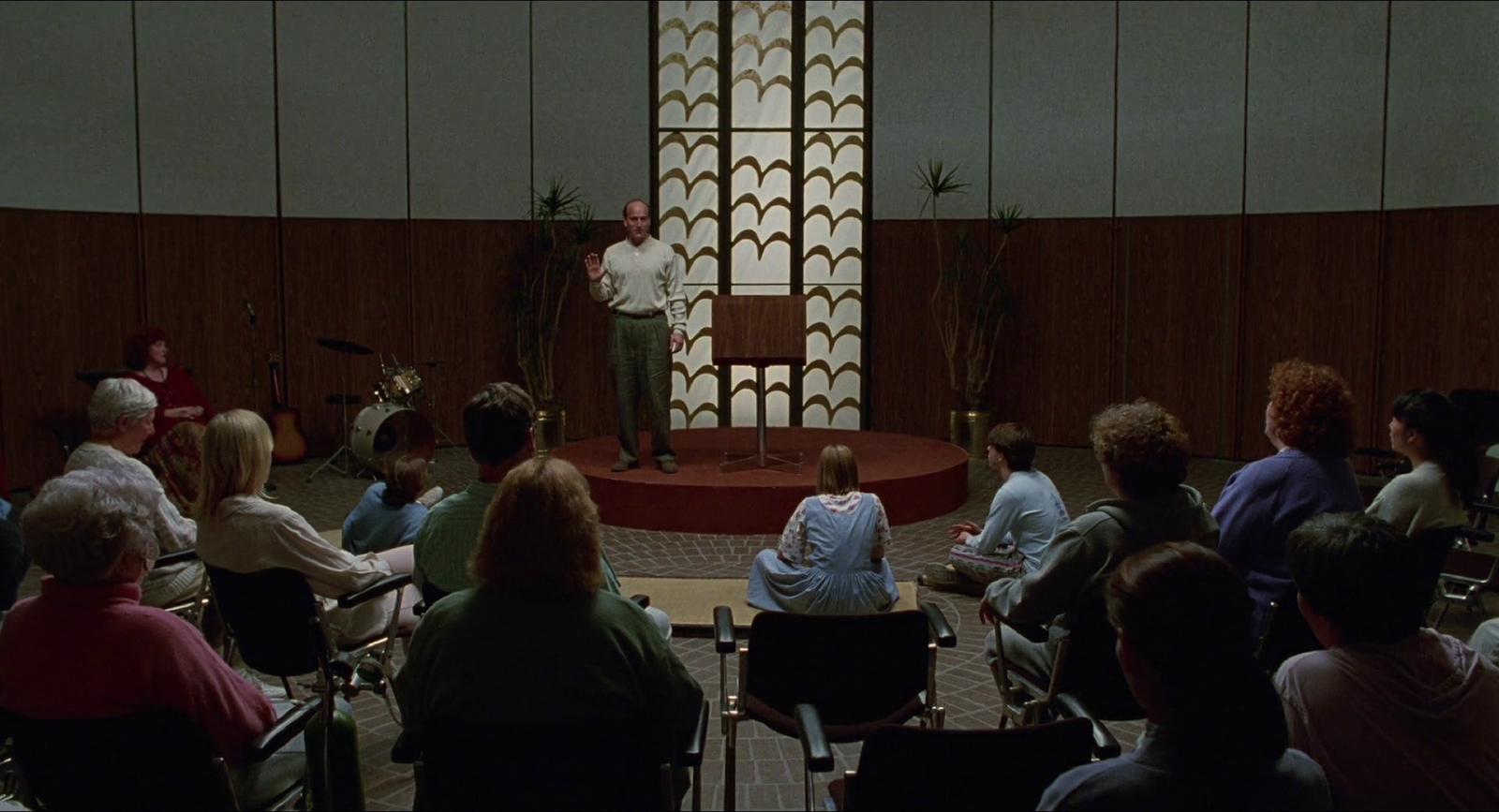
Carol goes directly from the hospital to the Wrenwood Center, a treatment facility for the chemically sensitive, where Peter Dunning, the charismatic, HIV-positive guru and director of Wrenwood, stands atop a small circular chestnut-colored stage in a small circular auditorium. Behind him is a ceiling-length opaque window adorned with a wrought-iron relief, a crude bird stacked on top of itself. Carol sits awkwardly in the audience, radiating susceptibility. For the first time in the film, natural materials dominate the frame. Warm midcentury wood panels line the walls. And then come the guitars, the women in linens, the crooning voice of someone desperately mimicking Joan Baez, singing “love has made a circle that holds us all inside.”
Todd Haynes, Safe, 1995 (still). Color film in 35mm, 119 min.
Wrenwood is a place for containment. It exists to offer residents the feeling of insulation from any and all physical, mental, or spiritual triggers. Haynes has explained that Wrenwood’s philosophy treats illness as something best managed by shutting out the world—keeping news, media, travel, and other potential irritants away—and creating a kind of holistic “quarantine” where immunity comes from total control over one’s environment.14
I have always wondered why Haynes chose for the center at Wrenwood to be so adamantly midcentury when the entire aesthetic underpinning of Carol’s life is postmodernism. AIDS was the first postmodern pandemic.15And seeing as “[the] film could not have existed without the epidemic,” it creates the image we see of Carol.16Lacking any universal treatment such as heliotherapy, the aesthetic response to AIDS tiptoed around persistent death, tragedy, and fear.17In the face of such despair, postmodernism is a sheet. Its language is a denial, the mode de rigeur for the Reagan administration, whose doctors cannot be trusted while millions die in silence. Postmodernism abandons its empirical core. Postmodernism is synthetic, made of plastics and medical-grade silicone. A glimpse of Carol’s bedroom is like looking into a Polly Pocket playset:18pink, teal, youthful, and aged all at the same time.19Perhaps the antithesis of late ‘80s postmodern design was the aesthetic of New Age Healing, represented in this instance as a 1970s continuation of midcentury modern design. The setting evokes a sense of nostalgia for a summer of love, for the drinking of Kool-Aid, the age of the successful cult.

Scan from The Complete Book of Home Design by Mary Gilliatt, 1989. Little Brown & Co, Boston.
Discussing his process of creating the film, Haynes explained that he’d looked into New Age philosophy, wanting to understand why people often turned to it as a framework for understanding illness, unhappiness, or emotional instability, and cited Louise Hay’s book You Can Heal Your Life as a key influence. Louise Hay, a controversial self-help author, motivational speaker, and New Thought “healer,” was known in the 1980s for her work among AIDS patients, often telling her audiences that AIDS was the result of a lack of love in their lives.20Acting as a substitute mother to many who’d been abandoned by their families, she offered teddy bears, mirrors for self-love exercises, and “Hayride” group encounters.21She believed self-love had cured her own cervical cancer, and that it could cure AIDS, too. At Wrenwood, Carol, likewise orphaned from “kingdom of the well,”22encounters a softer but similarly moralizing approach, where illness is framed as a manifestation of self-hatred. I understand such philosophies as a product of systemic failure on at least the level of national health. When empirical methods fail, patients reject what they know. The negligence and inadequacy of the U.S. healthcare industry gave way to increased interest in deprofessionalization of medicine, patient empowerment, and holistic remedy—and the idea that individuals could be the sole proprietors of their own health.
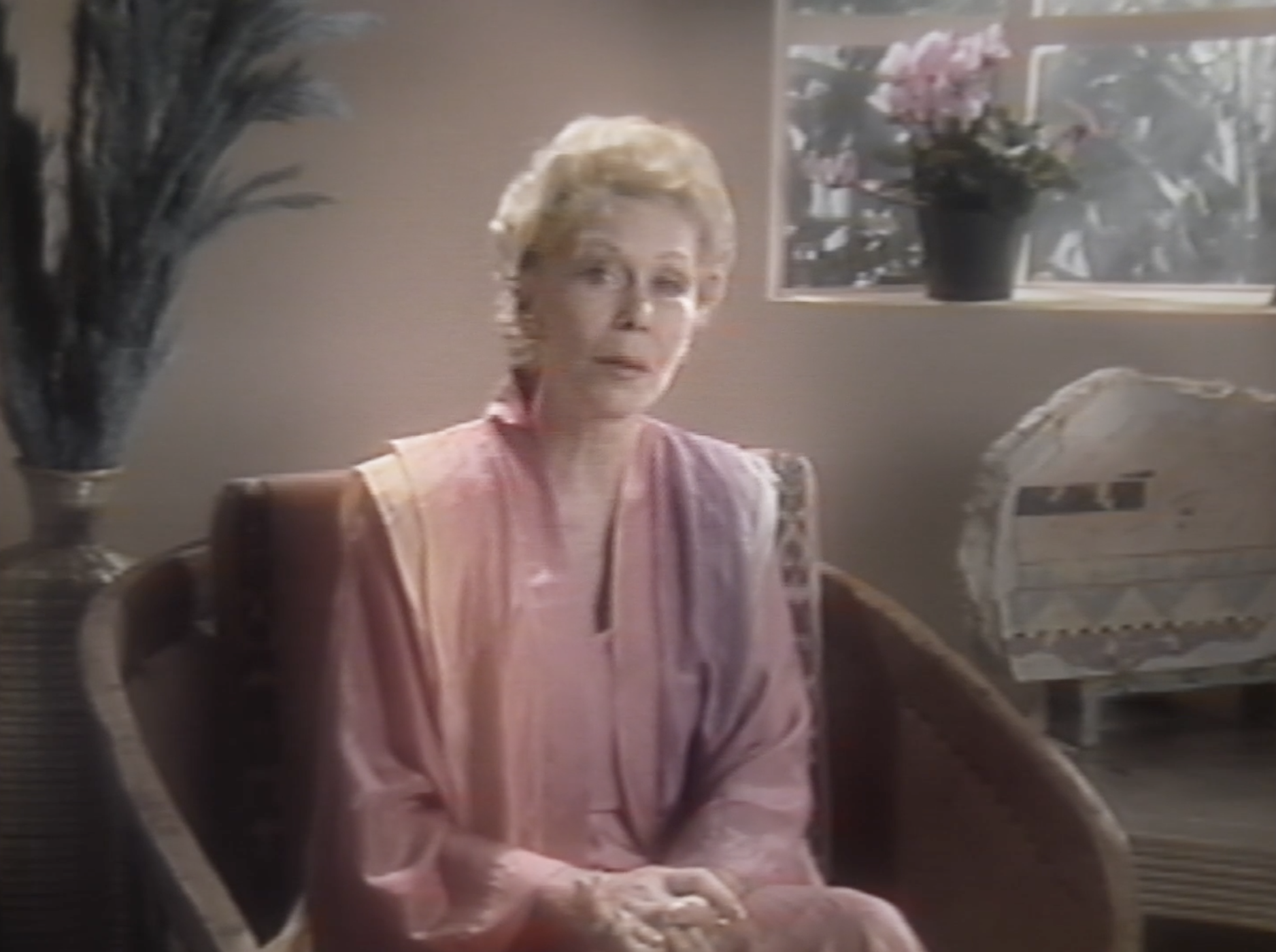
Image of archival footage via Another Hayride (2018), directed & produced by Matt Wolf. Available to watch here.
Safe is set in 1987, the same year the CDC launched its national America Responds to AIDS (ARTA) campaign,23and the same year that Haynes released his Barbie doll cult classic, Superstar: The Karen Carpenter Story, as an MFA student at Bard. While much can and has been said about its bootleg aesthetics,24the experimental docudrama, which portrays the career and death of singer Karen Carpenter, is also a contextual marker in Haynes’ work and in the general pedagogy of anorexia. Through campy PSA, the film states:
“The self-imposed regime of the anorexic reveals a complex internal apparatus of resistance and control. Her intense need for self-discipline consumes and replaces all her other needs and desires. Anorexia can thus be seen as an addiction and abuse of self-control, a fascism over the body in which the sufferer plays the parts of both the dictator and the emaciated victim who she so often resembles. In a culture that continues to control women through the commoditization of their bodies, the anorexic body excludes itself, rejecting the doctrines of femininity, driven by a vision of complete mastery and control.”25
Eating disorders are often minimized as a “control issue” for women, though the reality is a much more complicated web of family systems, culture, and trauma. Superstar and Safe are united in their shared ethos of female illness: that being sick is somehow linked to the feminine, a symptom of toxic invisibility, of desires so silenced they must speak themselves through the body. Throughout history, this dynamic has been contagious. As early as the Salem Witch Trials, “hysteria” spread amongst women and girls not through pathogens, but through recognition and mimicry. This also recalls the contemporary case in LeRoy, New York, a classically quiet, working-class town where 18 local teen girls spontaneously developed Tourette-like tics in the fall of 2011. The first two patients, Katie Krautwurst and Thera Sanchez, were both seniors and head cheerleaders and appeared on the Today show with their symptoms.26A neurologist who treated the girls spoke publicly about their diagnosis: mass psychogenic illness (MPI), or in layman’s terms, hysteria. Many in Leroy decided the disease was social, or even aspirational, for these girls. Neighboring towns were so afraid of symptoms spreading that they cancelled five high school basketball games in a row. Mothers implored their daughters to stay home.27

André Brouillet, A Clinical Lesson at the Salpêtrière, 1887. Oil paint on canvas, 110 in × 170 in.
Folie à Deux
Leroy has an echo in the online sphere. If Carol embodied the domestic housewife of the Reagan era, today’s figure is the mother-fluencer, whose digital presence translates private anxieties about purity and protection into public authority. Dr. Casey Means, Trump’s nominee for surgeon general, is one such mother-fluencer. Her rise from lapsed physician to health guru reveals how the performance of wellness online can secure not just followers but real political power. Means is a proponent of a similar moralized health philosophy, as Louise Hay was in her lifetime, that illness “is a result of the choices you make…”28Unlike Hay, Means still believes America’s unwellness originates from Big Food and Big Pharma. But for Means, it is up to the individual to navigate these traps. Her inactive medical license is no speedbump on the path toward America’s internal energy healing, her fertility a qualification for office. She symbolically leads a growing group of MAHA mothers for whom everything is detoxable.29An altar of infrared sauna blankets, fluoride-free toothpaste, unbleached dioxin-free toilet paper, and stainless steel pans surrounds them—an arsenal of organic consumer products to combat the same environmental illness as Carol. But rather than retreat to isolated camps like Wrenwood, MAHA moms go online, where they share their meticulously aseptic purity rituals and post glimpses of the homes they’ve made into impenetrable palaces of serene, germ-free living. These are the madonnas of detox. Whereas 21st century syndrome used to be the denouement of invisibility,30the algorithm seems to suggest their cleanliness is godliness… I guess we’ve ended the witch hunt.
Rockhaven

Rockhaven Sanitarium, exterior view, August 2025. Image courtesy of the author.
Casey Means is another grifter at home in the magic show of L.A.’s health scene, peddling matcha and prenatal gummies.31But before L.A. had health and wellness influencers, there was Agnes Richards and Rockhaven.
The suicide of Richards’s first husband shortly after the birth of their child had left her shocked and lost. A registered nurse, Richards began working in asylums across the Midwest, perhaps searching for answers. In 1917, she moved to San Bernardino for a job at Patton State Hospital, originally established in 1893 as the Southern California State Asylum for the Insane and Inebriates. The facilities followed the Kirkbride Plan, where one monolithic building stretches its wings over a vast, green countryside, like a pixelated bird.32The hospital started with 100 “inmates” (all technically admitted by the judiciary system at that time), and by 1904 had grown to accommodate 800.33Among countless other abuses, Richards discovered an influx of female patients around the turn of the century had caused such overcrowding that inmates were sleeping in hallways. Richards watched in horror as women were committed by their husbands and fathers, often diagnosed with the terribly vague, but all too understood phrase–“refusal to comply”–drugged, and deserted.

Patton State Hospital. Image via San Bernardino History and Railroad Museum.
This led Richards to found Rockhaven Sanitarium in 1923 in the La Crescenta foothills, “up where the winds blew like dancing goldfish.”34For the 80 or so years that it operated as a private psychiatric facility, Rockhaven’s tenets of care could be easily reduced to a daily regimen of sorts: care by and for women, and the radical offering of dignity and respect to all residents. The grounds were lush with rose gardens. Dwelling quarters featured bedspreads and lamps imported from Italy and France. Vaudeville trios performed regularly in the main gathering hall. Residents were required to get dressed in the morning, stroll through the garden once a day, and dine together in the evening. As residents became less and less ambulatory with age, Agnes built a nursing home on the grounds rather than throw her long-term patients out. For those with the financial means to afford it, Rockhaven provided lifelong, compassionate care in a group recovery setting.35
In stark contrast to asylum architecture of state-run institutions like Patton, Rockhaven utilized the cottage design model, which, unlike the colossal Kirkbride Plan, featured individual cottages and buildings united by garden pathways.36Richards subscribed to environmental determinism and wanted her patients to feel at home. Patricia (“Pat”) Traviss, Agnes’s granddaughter who took over Rockhaven in 1967, rose to the occasion, attending nearby Woodbury College and studying interior design under Toby Merman.37She shared her grandmother’s flair for extravagance and made the interiors her own with vibrant florals, bright teals and lavenders, and buckets of soft pink paint adorning the walls and even the ceilings.
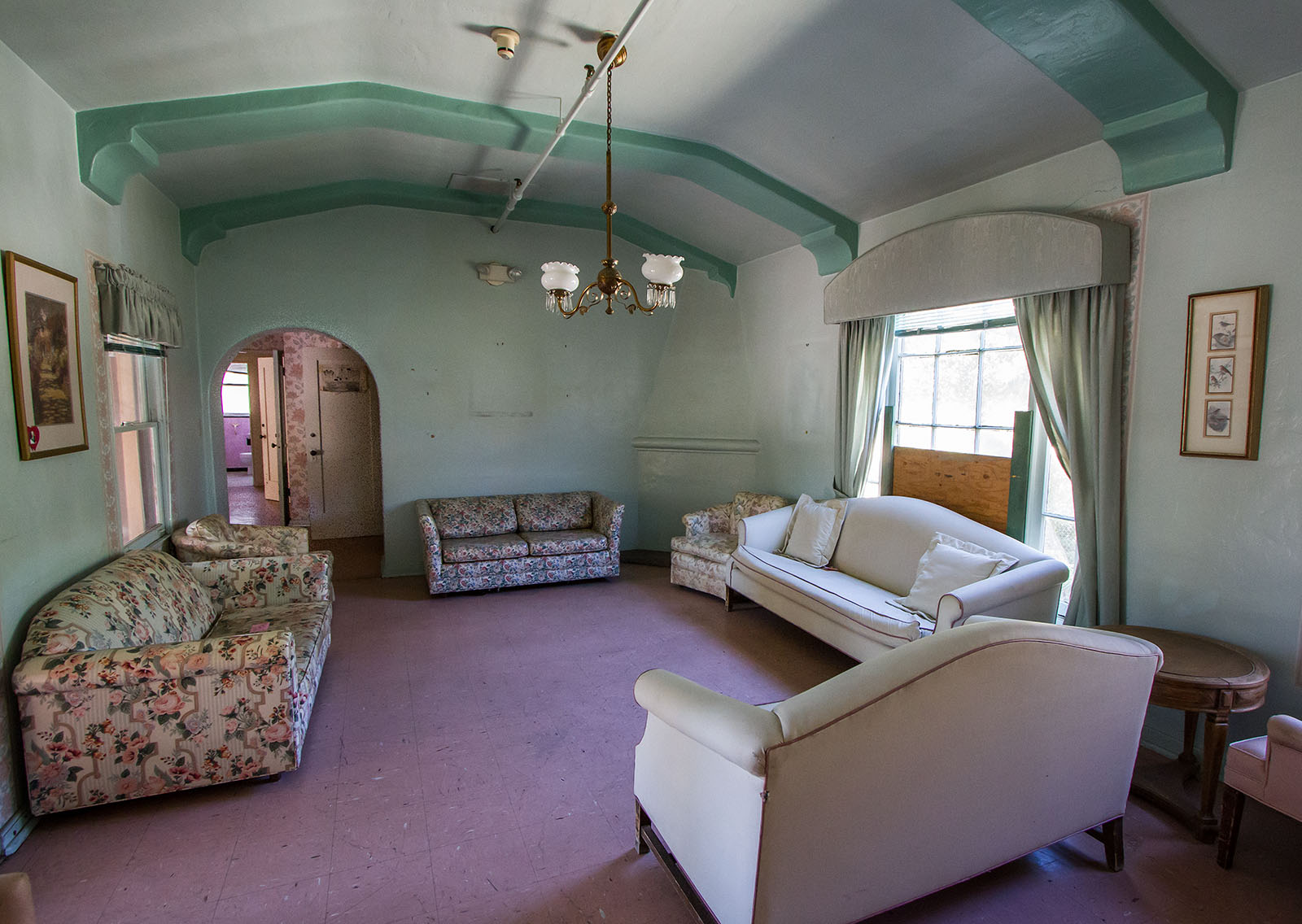
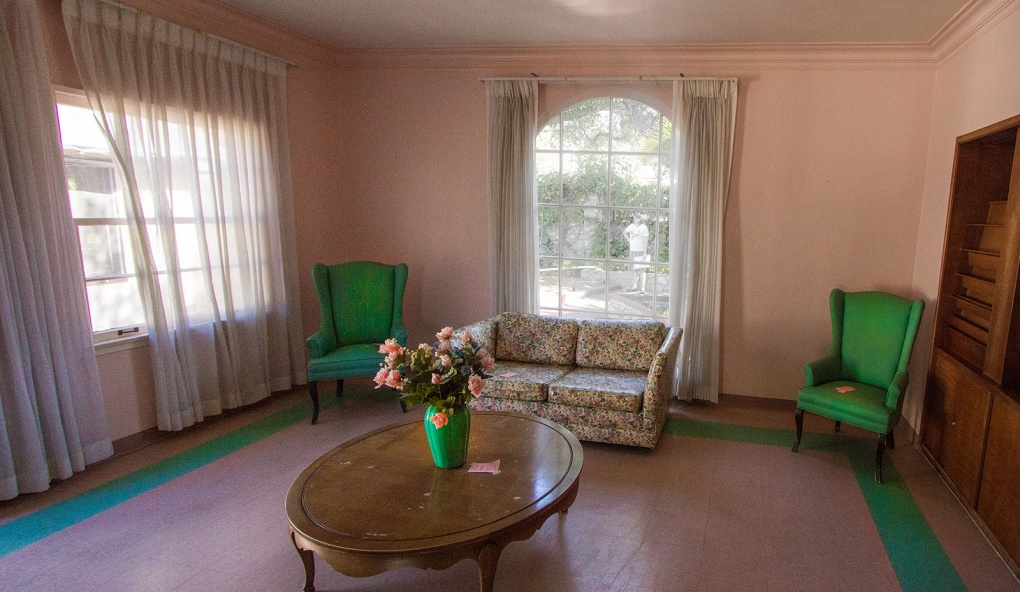
Interior views of Rockhaven Sanitarium (present day). Images courtesy of Friends of Rockhaven.
By Pat’s tenure at Rockhaven, the color pink was inextricably linked to femininity and, in turn, passivity. In 1979, Dr. Alexander Schauss theorized that Baker-Miller Pink, or “drunk tank pink,” a particular shade made by mixing white indoor latex paint with semi-gloss outdoor paint in a 1:8 ratio, had a calming effect on its viewer.38His theory was tested at the Naval Correctional facility in Seattle, where fights regularly broke out among inmates. Not only did violence decrease at the facility, but inmates were reported to be physically weaker too, likely due to the stress and appetite-suppressant effects of the hue.39Haynes weaponizes the color. The sick spaces of Safe drown in Baker-Miller Pink.40Carol dresses herself in pink daily. Her bedroom is bathed in it, as well as her doctor’s office, where her voice is almost inaudible and her apologies overflow. Her outfits become paler and paler as her skin thins, appearing as a swaddled, helpless baby. Reduced to unbleached white cotton sets, her only colors are the auburn of her hair and the sanguine sores on her face.41
The Air Now Thick and Visible
I recently moved into a new apartment, built in 1990. I scrubbed the baseboards, the walls. I mopped the leftover ash on my balcony from the January fires and got yelled at by my downstairs neighbor for dripping the silty remains on her porch. I had every air filter in the house replaced. I lay in bed with a headache, staring at the objects around me. In this room, there are two colors on everything: Baker-Miller Pink and a muted teal. I am a post-postmodern Carol. I subconsciously steal the aesthetics that comfort her. It is the aesthetic of barely existing. It is the aesthetic of accepting that I am ill.
Today, the Freedman house is charred, toxic rubble, a Pruitt-Igoe-esque symbol of the end of a mid-century dream.42It was swallowed in hours by the Palisades fire, radically agitated by the Santa Ana winds; the myth they carry.43Rockhaven has long been shuttered too, its historic upkeep deemed too costly.44Walking around the stone wall of its perimeter, I think about sealing myself inside one of its Spanish colonial cottages, the way Carol seals herself into a metal igloo at the edge of Wrenwood at the end of Safe. I think about how many women are sick and how many of them aren’t believed. I think about how many women aren’t sick, but are told their habits make them so. I think about how happy I could be living alone as a pinafored mouse in a little teacup,45and all the earthquakes, floods, and fires that come anyway.

View of the Palisades Fire, Los Angeles, January 8, 2025. Image via California Department of Forestry and Fire Protection (CAL FIRE).